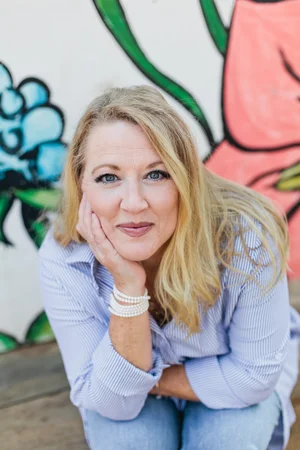
Heidi Thomas Part 1
The Story Behind the Headlines
Heidi Thomas Part 1
From America’s Dad to Hidden Reality
As a young girl, Bill Cosby represented the epitome of the all-American dad. Portraying
the beloved character of Dr. Huxtable on the widely acclaimed series, The Cosby Show,
he captured the hearts of millions, including my friend whose conservative parents
wouldn’t allow her to watch anything, but permitted her to watch that show. However,
unbeknownst to us, a stark contrast existed between the charming façade and the
harrowing reality. Today, we are honored to welcome our guest, Heidi Thomas, who not
only lived through that reality but also had the courage to testify about it in court.
Welcome to Qavah
HT I had an agent. She called me and said that there was an icon in the industry that wanted to
look at promising young talent and see if he could help and I thought first of all, wow, my agent
thinks I'm promising young talent. And she wanted to know if, you know, I was willing to get
some one on one acting coaching. And like I said, we'll work stuff. And then my next question
was, what was it going to cost me and she said, Well, we're going to pay for everything. You're
going to be flown for one on one, coaching. And then she finally told me that the person was Bill
Cosby. And we were only to refer to him as Mr. C
This unexpected encounter launched Heidi's life on a path she could never have
imagined. Prior to this pivotal moment, she had never ventured beyond the borders of
her beloved home state of Colorado.
Theme song
Host (Voiceover): Welcome to Qavah the Podcast where hope becomes the lifeline
in the face of adversity. I'm your host, Kelly Archibald, and in each episode, we
delve into the remarkable journeys of individuals who have navigated through
the darkest of times, relying on the power of hope and perseverance.
The accounts shared on this Podcast, including this Episode, reflect the guests’
thoughtful recollections and opinions of experiences perceived and occurring
over many years, including childhood memories, which may be fallible and
limited by perspective and trauma. Persons may have different memories
regarding certain events.
Meet Heidi Thomas
HT native of Colorado. And people say oh, you're rare. On the natives all the time. So we must
somehow have some magnetic draw or something. But I grew up in a town in a suburb of
Denver. Okay, and I'm like so many families today. I grew up in pretty much one house. In fact,
my mom at night Walker has just moved out of the house. She was seven years old. Wow. No
transitory lifestyle. There. Yeah, that's all up there with my one and only sibling. My sister. Okay.
Now I live about 25 miles south of where I grew up. Yeah. bonafide Colorado.
Okay, it so do you have a first memory you'd like to share?
You know, I was thinking about this knowing that you do these. What's interesting to me, I'm
the oldest. My sister is five years younger than I was sure I must have memories before she was
born. But isn't it interesting that I don't really I really don't remember anything. You know, one
on one with mom and dad. I'm sure they happen. But I think my memories are being spurred by
photos. I see. Oh, okay. But what's interesting to me is the first thing I can promise I remember
was the day after she was born. Oh wait. Apparently important that was I have heard from my
mom that apparently I've been asking for younger something. You know, I don't remember that.
I do remember the day after and at the time, children were allowed up in the maternity stuff. So
I was you know, basically five years old. And my dad in his infinite insanity. decided that the best
thing he could do for my mother who has just given birth is by the cheap it wasn't it wasn't even.
It wasn't even there. He got it totally fine. You know, now it's all cool. It was not okay. Okay,
whatever. So we were the first and he brings this will say the liquids or we call it toto because
pronounced toto and every go and I remember waiting to my mom from her window in the
hospital up on the water floor that was and thinking oh, she's gonna be so excited and now as
an adult, having had three children document planet was it oh my goodness that I can't do that I
finally had this sibling and I do remember holding her. So, you know, I really when you asked me
those questions, I thought to tell her that I ever thought about until you you pose those and said
Be ready to talk about this. I never thought about what a monumental thing was to me right
now and she needs to know that Yeah, your precious little baby sister.
My precious little baby sister's like two inches taller than she is a trip. We balance each other
out. Were kind of a interests and styles and everything but you know that's one of those
marvelous miracles of siblings. I got the love there. Appreciate the differences. Yeah,
Heidi grew up in a musical household where music was not just a hobby but a cherished
part of her family's life. Little did she know that music would soon take on a profound
significance and play a transformative role in her own journey.
A House Filled with Music
KA So, so growing up, did you play music?
HT I did, okay. And it's kind of a running joke. My mom was a piano teacher and my
grandmother was a piano teacher. So mom was my first piano teacher. And then I moved to
grandma and it never occurred to me in my childhood that I thought every kid had to do this. So
there was never a discussion on I don't like it at our practice. Doesn't it didn't matter because I
thought everybody had to write. So I kept on going and of course, again, I'd say is 2020 Right. I
mean, by the time I was even a sixth grade, well, heavy reading music mom and grandma,
before I can read words, wow, whoa, by the time I was in sixth grade, I was certainly better than
my parents were. Wow. Oh, by the time I was in high school, you know, I was the accompanist
for the choirs and the whatever. And let's face it, you write what you're good at writing. Right.
You get accolades and you get nice comments and you feel proud. So yes, music was huge part
of our house mom and dad both sang in church prior and as I said that, I think they had a
grandfather who was a band director. We had professional clarinetists and it just runs in our
family. So I don't I think I was genetically. Yes,
it's an awesome thing. I think music is is such a language of its own and it touches parts of us
that we can't speak to with words necessary. Absolutely
right. I have little sayings all over this room by music that I could read to you and bore you to
tears but that's, you know, it's called the universal language. And especially when you're
teaching kids and I mean, I've done that I've done the whole K through 12 music teacher public
schools, all that when you're teaching kids and you help them when they start recognizing that,
you know, there's English and there's, there's Chinese and there's Russian, but then doesn't
matter. Where in the world you go. The music is the same, every single place. If you can read
music, you reuse it, and that people can get together talk about a thing. You can bring together
150 People from 150 nations Yes. Given a score of music, and without saying a word. They can
make a song together. That's the kind of message I used to try to hurt when I was teaching,
kiddos whether you love music or not, right like you too. I think you'd enjoy it. But there's
something far deeper going on here so that it can be shared. And again, back to what you do
with your podcast. Music is a common ground MCs it has the capacity to be a piece spreader.
Yes, yes. Especially when people are open to. Well, that music sounds weird. If you open up and
just recognize that it's different, right? It's not what you're used to. Right? It's music. You listen
to it. And what's that little that little wall breaks down right? I mean, I can I can wax poetic. If I
could do anything. I had this vision of playing in a corner in a tent somewhere in Saudi Arabia or
something, and no one can see me. But I've been fleeing quiet music Well, peace talks, we're
going to see if because they know some of the neuroscience of new acoustics. It can just de
escalate some of the to be honest testosterone in the room and see if we can get people down
on a level where they will listen to each other. I think music has that capability. Agree and so
yeah, when people said What's your most outrageous dream, right? That's it. I want to be I want
to be playing and attempt somewhere in the middle east won't get started going on. Yeah, that's
awesome. Out there in the universe. If you hear oh, there you go. So,
um, did you you graduated from high school in Colorado and did you go on?
I did it. No, no, this is such a Colorado person. I even went to small farmer that was because I
got a very good story. I should tell you since you know, you might want to cut this out. I don't
know if people know you're in Texas but a lot of playbooks at SMU with the candidates
absolutely love the campus but at the view, I can afford to live at home right. And even with
their scholarship, it was a fabulous school. Right and I didn't have to pay for housing. Right? Of
course. I joined a sorority and so I botched that whole plan my parents but good school. I feel
like they did kind of miss out on things like college football. We had hockey, which is amazing.
Yes, but there weren't any marching bands. I played flute Niccolo as well. And so those kinds of
college experiences I kind of wanted my daughters to have right I thought that was kind of cool
and I was so focused on being a music business person. I'm okay. Therefore football and fun in
rather. Okay, that was a real nerd.
So did you get a degree in music business?
Yeah. Oh, that's another funky story. Another reason I picked d u was that they had a business
of Fine Arts degree. Wow. And I thought okay, this is where you can become like a theater
manager. The store manager. This is how I'm going to keep my my fingers in the fine arts but
actually have an income that's what I signed up for. And back in the day when you went to go
register for your classes. We all went into the Fieldhouse, the gym, okay. And we have little
computer cards and you go and you pick a computer card from all the classes that you were
supposed to take. Okay, based on this piece of paper that said for your major you need these
classes this quarter. I go around none of the classes that my piece of paper said I needed. I
mean, I've got the basics like English, you know, right. Yeah. But nonetheless, the classes were
available. So I ended up going to the counseling table. They looked very confused and they said,
Oh, only four people signed up. For that major. So we cancelled it. Oh, I said, you know, if I'd had
that that's I have now put it in nice to know right? But then let us know. So by default, because I
had to do something. I became a piano performance major. Okay, I'll figure it out. And then
after about a year, I realized I was going to be music education. Okay. So that's what my degree
was. Okay.
So then after you got your degree, what did you do? Where did you take you
this is so funny. I hope people listening will recognize that you know, that that will say, if you
want to hear God laugh, just try to make a plan, right? Yes. Okay, so I have a plan to go into
music business and and then I had planned that after this, I'll go teach. And my poor dad was
very concerned about me being a music educator. He thought I should have gone into business
and science. I was really good at these things. And I had three job offers when teaching jobs
before he graduated. Wow, I'm gonna turn the ball because I thought if I'm gonna try musical
theater, this is the time to do it. Right. I had no hopes and dreams. That someday there'll be
hopefully Mr. Rain and family at all. And I thought, I'm not gonna, I'm not going to be doing this
then. So I'm going to try this. This is the time to do it. Okay. So that's what I did. And here in the
Denver area, I became kind of a big fish in a little pond. It wasn't you know, overwhelming. I still
was living in and out sometimes back with mom and dad and my apartment and it just
depended on what show I was cast in or not right. Now, so I did that for a while. Until you know
life changed again. And I was kind of disillusioned by the entertainment business.
KA So do you have any significant experiences about that you would like to share
HT I'm going to preface this by saying you know, we don't know what we don't know. Right,
growing up. I was known as the worrywart. Okay, okay. My dad apparently just didn't worry
about anything. Oh, wow. So my mom and I took it over. And so here I am this little kid and I
worry about everything. I read about this driving. We did four wheel driving and Jeep trips and
hiking, camping in the mountains, the Rocky Mountains you're obviously all the time. But I loved
the four wheel drives, but if he got too close to the edge of some really, you know I was in
basket. I worried about my baby sister I worried about like rates. I worried about not being good
enough at the piano for my next lesson.
Living with Anxiety Before I Knew Its Name
Having grown up with a natural inclination towards worrying, Heidi came to believe that
anxiety was an inherent part of her identity. However, it wasn't until she reached
adulthood that she started to recognize the possibility of finding assistance and support
for her struggles.
I just constantly fast forward and it took me until I was I had already had my children. So I was in
my early 30s. When I realized this, this isn't normal. This is beyond worrying. And I was I finally
allowed myself to go to a psychiatrist. I hadn't wanted to do it rent because between like faith,
I'm a strong human being doing all this stuff, right? I should be able to tackle this on my own and
I'm a person of faith and I finally finally got it through my head. You know, doctors were put
here for a reason right there also they have gifts right given to them. And perhaps you're looking
these. You haven't particularly locked in and I talked to a psychiatrist and 20 minutes he said,
Oh, you have an anxiety disorder. And he said, You're you're going to be fooling you have a
chemical imbalance in your brain. So they explained to me what happens with serotonin and
inhibited uptake inhibitors SSRIs work and and I burst into tears. I said, Are you telling me that
medication can fix this? And he said, I think so we have to try it out. And we have to see you
know, there are different types of medication we have to see what works for you and what
makes you feel good because everybody's different, right? It was it was life changing.
Unbeknownst to Heidi, a deep trauma from her past lay dormant beneath the surface,
waiting to be unearthed.
The Phone Call Every Young Actress Dreams About
I had been in the theater world here, music theater world in Denver. I had an agent. She called
me and said that there was an icon in the industry that wanted to look at promising young talent
and see if he could help and I thought first of all, wow, my agent thinks I'm promising young
talent. And she wanted to know if, you know, I was willing to get some one on one acting
coaching. And like I said, we'll work stuff. And then my next question was, what was it going to
cost me and she said, Well, we're going to pay for everything. You're going to be flown for one
on one, coaching. And then she finally told me that the person was Bill Cosby. And we were only
to refer to him as Mr. C. So if, in fact, any of our discussions were overheard by another talent in
the agency, there wasn't going to be any accusation of favoritism or you know, teacher's pet or
anything. Mr. C, was given my home number I was living with my parents. So he called he talked
to my parents. And we now know this is part of his MO This is his for make process. He gets to
know the person the family, Mr. Charm, Mr. Jello, hooding, all of those things that that we knew
at the time. This was
84. And so by the time I actually met him, my agent flew me to Reno where he was doing a
show. My agent paid for a hotel room. And I flew there I was picked up at the airport by you
know, a driver and I'm so excited. I've never been out of college. So other than on Camp trips. So
I picked up a postcard at the airport so I could find my hotel. And it's in a postcard. I was going
to be gone for four days. And I couldn't you know circle where what my room was maybe later.
And we're driving and I realized that we know this. Now the hood so I asked the rider where we
were going and he said, Oh, there's been a change of plans on taking you right to where Mr. C's
staying.
Join us in the next episode of Qavah as Heidi bravely confronts her past and embarks on
a journey of healing and self-discovery.